Auto Insurance
After an accident: the first hour and the next month
What to do at the scene, what to say, and what determines how the claim resolves.
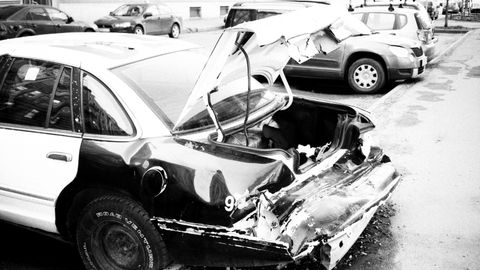
Most people handle an accident once or twice in a lifetime, under stress, having never thought about it in advance.
The decisions made in the first hour affect the outcome considerably.
At the scene
Check for injuries and call emergency services if anyone is hurt. Move vehicles out of traffic if safe and if the law permits.
Call the police. In many states a report is required above a damage threshold or where there are injuries.
Even where not required, a police report is valuable documentation. Get the report number and the officer's name.
Exchange information. Name, address, phone, insurer, policy number, driver's license number, license plate.
Photograph the other driver's license, insurance card and plate rather than writing them down.
Photograph everything. All vehicles from multiple angles, damage close up and in context, the position of vehicles before they are moved, the road, signage, traffic signals, skid marks, debris, weather and lighting conditions.
More photographs than seems necessary. They cost nothing and they resolve disputes.
Get witness contact details. Independent witnesses are extremely valuable in disputed liability, and they leave quickly.
Note the details while fresh: time, direction of travel, speed, what each vehicle did, what you saw.
What not to say
Do not admit fault, apologize in a way that could be read as accepting responsibility, or speculate about cause.
This is not about evasion. Fault determination involves law and facts you may not have — the other driver may have been speeding, distracted or impaired, which you cannot know at the scene.
State facts to the police. Leave conclusions to the investigation.
Similarly, do not agree to handle it privately without involving insurers. Damage frequently exceeds initial appearance, injuries frequently appear later, and you lose your protection.
Injuries that appear later
Important and commonly mishandled.
Soft tissue injuries, particularly neck and back, frequently do not present symptoms for hours or days.
Get evaluated medically even if you feel fine, and certainly if any symptoms develop. A gap between the accident and the first medical visit is used to argue the injury was unrelated.
Follow the treatment plan and attend appointments. Gaps in treatment are similarly used against injury claims.
Reporting to your insurer
Report promptly regardless of fault. Policies require prompt notice, and failure to report can prejudice coverage.
Report even if you do not intend to claim, because the other party may.
Provide the facts you documented. Do not speculate.
The other driver's insurer
Their adjuster may contact you. Some points worth knowing.
You are generally not obliged to give a recorded statement to the other party's insurer. Their adjuster works for them, and recorded statements are used to establish comparative fault and to characterize injuries.
Where injuries are involved and liability is disputed, consider consulting an attorney before giving a statement.
Do not sign a release until you understand what you are releasing and until the extent of injury is known. A release signed early, before the full extent of injury is apparent, ends the claim.
Early settlement offers on injury claims are frequently made before treatment is complete, for exactly this reason.
The fault question
Fault rules vary substantially by state.
At-fault states assign liability, with the at-fault driver's insurer paying.
No-fault states require each driver's own personal injury protection to pay their medical costs regardless of fault, with limits on suing except in defined circumstances.
Comparative negligence rules apportion fault between parties, reducing recovery proportionally. Some states bar recovery entirely if you are found more than fifty or fifty-one percent at fault.
Contributory negligence states, of which there are few, bar recovery if you bear any fault at all.
This is why not admitting fault matters, and why documentation matters.
The repair process
You generally have the right to choose your repair shop, though insurers may recommend a network shop with guaranteed work.
Get the insurer's estimate in writing, itemized.
If the shop finds additional damage during teardown, a supplement is submitted. This is normal.
Ask about parts: aftermarket, reconditioned or original equipment. Policies differ, and this affects both cost and quality. Some states regulate the disclosure and use of non-original parts.
Consider diminished value, which is the reduction in resale value of a repaired vehicle. Recovery for it varies significantly by state and is generally more available against the at-fault party's insurer than your own.
If the vehicle is a total loss
You receive actual cash value less deductible where applicable.
Research comparable vehicles for sale locally before accepting the valuation, and provide that evidence if the offer seems low.
Check whether sales tax and title fees are included, which they are required to be in many states.
And if you owe more than the settlement, gap coverage is what fills it.
Keeping records
Every document, every call, every receipt, every medical visit.
Claims that go wrong go wrong slowly, and the record is what protects you.
General information about insurance claims, not insurance, legal or medical advice. Fault rules, reporting requirements and claim procedures vary substantially by state. Consult a qualified attorney where injuries or disputed liability are involved.
Also by Grace Mbeki
- A yearly insurance review across everythingClaims & Disputes
- Choosing an insurer, not just a priceClaims & Disputes
- Homeowners coverage: the annual checkHome & Property
- The annual auto policy reviewAuto Insurance