Home & Property
Replacement cost versus actual cash value
The single most consequential distinction in a homeowners policy, decided by a phrase most people never read.
How a policy values a loss determines what you receive, and the difference between the two standard methods can be tens of thousands of dollars on the same claim.
The two methods
Actual cash value is replacement cost less depreciation. A fifteen-year-old roof with a twenty-year life is valued at roughly a quarter of replacement cost, because it was three-quarters through its life.
Replacement cost pays what it costs to replace with new materials of like kind and quality, without deduction for depreciation.
On a $22,000 roof replacement with a fifteen-year-old roof, actual cash value might pay around $5,500 before the deductible. Replacement cost pays $22,000 less the deductible.
Same policy limit, same premium structure, entirely different outcome.
The recoverable depreciation mechanism
Replacement cost policies typically do not pay the full amount upfront.
The insurer initially pays actual cash value. Once repairs are completed and documented, the remaining amount — the recoverable depreciation — is released.
Which means you must front the difference, or arrange a contractor willing to work on that basis.
It also means the recoverable depreciation is forfeited if you do not complete the repairs. Homeowners who take the initial payment and do not repair receive only the depreciated amount.
There is usually a deadline for completing repairs and claiming the balance, commonly six months to two years. Note it.
Where actual cash value appears in a replacement cost policy
This is the important part, because policies described as replacement cost frequently value certain things at actual cash value.
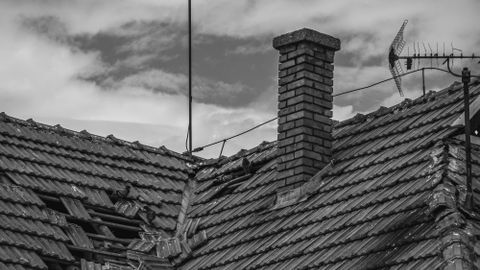
Roof coverage. A significant trend. Many insurers now apply actual cash value to roofs above a certain age, or apply a roof surfaces payment schedule that reduces payment with age.
In hail-prone regions this is now common, and it substantially reduces recovery on the most frequently claimed component of a house.
Check your declarations page and any roof endorsement specifically.
Personal property. Standard policies frequently cover contents at actual cash value unless replacement cost coverage is added as an endorsement.
The difference on contents is large. A ten-year-old sofa, television and wardrobe of clothing have very little actual cash value and substantial replacement cost.
Replacement cost coverage on contents is usually inexpensive and worth adding.
Certain categories — fences, awnings, outdoor equipment, carpeting in some policies — may be settled at actual cash value by policy terms.
Extended and guaranteed replacement cost
A further distinction that matters after widespread disasters.
A standard replacement cost policy pays up to the dwelling limit. If construction costs have risen — as they do sharply after a regional catastrophe, when demand for labor and materials spikes — the limit may be insufficient.
Extended replacement cost provides a percentage above the dwelling limit, commonly twenty-five or fifty percent.
Guaranteed replacement cost pays whatever it costs, without a cap. Increasingly rare and valuable where available.
After major wildfires and hurricanes, many homeowners with adequate-seeming limits found themselves underinsured because rebuilding costs had risen dramatically in the affected area.
The coinsurance trap
Most homeowners policies require the dwelling to be insured to at least a specified percentage of replacement cost, commonly eighty percent.
If it is not, a penalty applies to partial losses, reducing the payment proportionally — even on a loss well below the policy limit.
So a homeowner insured at sixty percent of replacement cost, suffering a $60,000 loss, may receive substantially less than $60,000 even though the limit is far higher.
This is why keeping the dwelling limit current matters, and why construction cost inflation has been a genuine problem for policyholders who have not reviewed their limits.
Checking your position
Read the declarations page and find, for each coverage: whether it is replacement cost or actual cash value; the limit; and any endorsements modifying the settlement basis, particularly for roofs.
Then ask your agent to run a replacement cost estimate on the dwelling using current construction costs, and compare it to your limit.
Do this every few years, and after any renovation.
Note that replacement cost is not market value and not the purchase price. It is the cost to rebuild, which excludes land and can be higher or lower than market value depending on the market.
The action items
Ensure the dwelling is at replacement cost, with extended replacement cost if available.
Add replacement cost coverage on personal property.
Check the roof settlement basis specifically.
Update limits for construction cost inflation.
And keep an inventory of contents with photographs, because at claim time you will be asked to prove what you owned.
General information about insurance concepts, not insurance advice. Policy language, settlement provisions and endorsements vary by insurer and state. Read your own policy and consult a licensed agent.
Also by Grace Mbeki
- A yearly insurance review across everythingClaims & Disputes
- Choosing an insurer, not just a priceClaims & Disputes
- Homeowners coverage: the annual checkHome & Property
- The annual auto policy reviewAuto Insurance