Home & Property
Trees, Fences And Damage That Crosses A Boundary
When a neighbour's tree falls on your house, the policy that responds is usually your own, and negligence rather than ownership decides whether anything is recovered.

Damage that crosses a property line produces one of the most persistent misunderstandings in home insurance. Ownership of the object that caused the damage is rarely the deciding factor.
Where the tree came from does not decide the claim
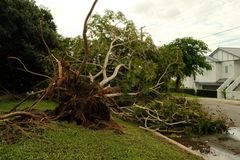
Property insurance responds to damage to the insured property, so a fallen tree is claimed under the policy of the house it landed on.
That holds whether the tree grew in the insured's garden, the neighbour's, or on public land, because the policy insures the building rather than the cause.
The owner pays their own deductible, which is the outcome that most often feels unjust and is nonetheless how the contract is written.
Negligence is what changes the answer
Recovery from a neighbour generally requires showing they were negligent, meaning they knew or should have known the tree was dangerous and failed to act.
A healthy tree brought down by a storm is treated as an act of nature, and no liability attaches to the owner for failing to prevent the weather.
A visibly dead or diseased tree is different, especially where the neighbour was told about it, and written notice is what converts a suspicion into evidence.
Subrogation and how the recovery happens
Where negligence is arguable, the insurer that paid the claim pursues the neighbour's liability cover rather than leaving the owner to do so.
If that recovery succeeds, the insured's deductible is normally returned in proportion to the amount recovered.
Because the insurer decides whether pursuing recovery is worthwhile, small claims often go unpursued even where the argument would have succeeded.
Debris removal has its own rules
Policies commonly pay to remove a fallen tree only where it damaged an insured structure or blocked access, not merely because it is now lying in the garden.
Where removal is covered, a separate and modest sublimit often applies, and it is measured per tree or per occurrence depending on the wording.
Removal of the portion that remains standing is generally not covered, since an undamaged tree is not an insured loss.
Fences, boundaries and shared structures
Fences are usually insured as other structures under a sublimit expressed as a percentage of the dwelling limit, which is smaller than owners expect.
Shared boundary structures raise ownership questions that property law rather than insurance resolves, and the answer determines whose policy responds.
Rules on tree liability, boundary ownership and neighbour notice vary by jurisdiction and change over time, so local law and the policy wording govern.
Also by Grace Mbeki
- A yearly insurance review across everythingClaims & Disputes
- Choosing an insurer, not just a priceClaims & Disputes
- Homeowners coverage: the annual checkHome & Property
- The annual auto policy reviewAuto Insurance