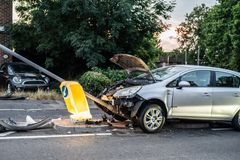
Auto Insurance
Liability limits: the number that actually protects you
State minimums were set decades ago and have not kept pace with what a serious accident costs.
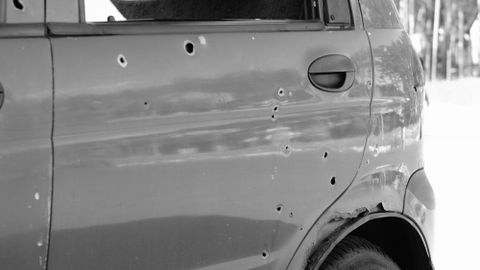
Auto liability coverage pays for injury and damage you cause to others. It is the part of the policy that protects your assets, and it is where people economize most.
Reading the limits
Liability limits are typically written as three numbers, such as 50/100/50.
The first is bodily injury liability per person — the maximum for any one injured person.
The second is bodily injury liability per accident — the maximum for all injuries in one accident.
The third is property damage liability per accident.
So 50/100/50 means $50,000 per injured person, $100,000 total for injuries, $50,000 for property damage.
Some policies use a single combined limit instead, which is a single maximum for the whole accident and is generally more flexible.
Why state minimums are inadequate
Minimum required limits vary by state and in many states are strikingly low — in some cases $25,000 per person for bodily injury.
Consider what a serious injury costs. A hospital admission with surgery, imaging, intensive care and rehabilitation routinely exceeds $100,000. Add lost wages, ongoing care and pain and suffering, and a single serious injury claim can reach several hundred thousand dollars.
Property damage minimums are similarly outdated. New vehicles frequently cost more than the minimum property damage limit in several states, and a multi-vehicle accident easily exceeds it.
When the claim exceeds your limits, the insurer pays up to the limit and the remainder is your personal responsibility. That means your savings, your home equity in some states, and potentially wage garnishment.
What limits to carry
The general principle is to carry limits at least equal to your net worth, and more if your future income is substantial.
For most households, 100/300/100 is a reasonable floor, and 250/500/100 or higher is frequently advisable.
The cost of increasing limits is much lower than people expect. Moving from state minimum to 100/300/100 typically costs a modest amount more per month, because severe claims are relatively rare — which is precisely why the coverage is cheap and why the exposure is worth insuring.
Umbrella policies
An umbrella policy provides liability coverage above the limits of your underlying auto and home policies.
Typically sold in increments of a million dollars, and typically inexpensive relative to the protection, because the underlying policies absorb the frequent claims.
It requires minimum underlying limits, usually 250/500/100 on auto and a specified amount on homeowners.
Umbrella coverage also frequently extends to claims the underlying policies do not cover — certain personal injury claims such as libel and slander, and in some cases legal defense costs.
For anyone with meaningful assets, an umbrella policy is among the best value in personal insurance.
Uninsured and underinsured motorist coverage
The coverage that protects you when the other driver is at fault and cannot pay.
A significant share of drivers are uninsured, varying substantially by state. Many more carry only minimum limits.
Uninsured motorist coverage pays your injuries when the at-fault driver has no insurance. Underinsured motorist coverage pays the gap when their limits are insufficient.
This is genuinely important and frequently declined to save premium.
Consider the asymmetry: you can control your own liability limits, but you cannot control what the other driver carries. If you are seriously injured by a driver with minimum limits, your own uninsured motorist coverage is what pays for your care and lost income.
Carry it at limits matching your liability limits.
Note that these coverages are mandatory in some states, optional in others, and the rules on stacking across multiple vehicles vary considerably.
What liability does not cover
Your own vehicle damage, which is collision coverage.
Your own injuries, which are medical payments, personal injury protection or health insurance depending on the state.
Intentional acts.
Commercial use, in most personal policies. This matters for anyone driving for a rideshare or delivery service, where personal policies frequently exclude coverage during commercial activity and platform coverage may have gaps.
The reasonable structure
Liability limits at 250/500/100 or higher.
Uninsured and underinsured motorist at matching limits.
An umbrella policy if you have assets to protect.
Then economize, if you must, on the coverages for your own vehicle — a higher collision deductible, or dropping collision on an old car — rather than on the coverage that protects everything you own.
General information about insurance concepts, not insurance or legal advice. Coverage requirements and options vary by state. Consult your policy documents and a licensed agent about your specific situation.
Also by Grace Mbeki
- A yearly insurance review across everythingClaims & Disputes
- Choosing an insurer, not just a priceClaims & Disputes
- Homeowners coverage: the annual checkHome & Property
- The annual auto policy reviewAuto Insurance