Auto Insurance
Comprehensive, collision and what a deductible really buys
The coverages for your own vehicle, where the right answer depends on the car’s value and your ability to absorb a loss.
Liability protects other people. Collision and comprehensive protect your vehicle, and the decision about whether to carry them is genuinely optional in a way liability is not.
The distinction
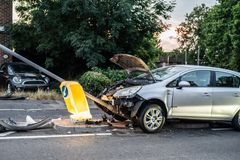
Collision covers damage from impact — with another vehicle, with an object, or from a rollover. It applies regardless of fault, which is its main value: if you are at fault, or the other driver is uninsured, collision pays.
Comprehensive covers essentially everything else: theft, vandalism, fire, flood, hail, falling objects, and animal strikes.
Animal collisions are worth noting specifically. Hitting a deer is generally comprehensive, not collision, which is favorable since comprehensive deductibles are often lower and claims may be treated differently in rating.
What they pay
Actual cash value at the time of loss, less the deductible.
Actual cash value means market value, accounting for depreciation. Not what you paid, and not what it would cost to replace with a new one.
This is the source of most dissatisfaction with vehicle claims. A three-year-old car may have lost a substantial share of its value, and the settlement reflects that.
If the repair cost exceeds a threshold percentage of actual cash value — set by state law or insurer practice — the vehicle is declared a total loss and you receive the value rather than a repair.
The gap problem
If you financed or leased the vehicle and owe more than its actual cash value, a total loss leaves you owing the difference with no car.
This is common in the first years of a loan, particularly with small down payments and long loan terms.
Gap insurance covers the difference. It is available from insurers, from lenders and from dealers, and the pricing varies enormously — dealer-sold gap coverage is frequently far more expensive than the same protection added to your auto policy.
If you owe more than the car is worth, this coverage matters.
Choosing a deductible
The deductible is what you pay before coverage applies, typically $250 to $1,000, sometimes higher.
Raising it reduces premium. The question is how much, and whether the saving justifies the exposure.
The calculation: find the annual premium difference between deductible levels, and compare it to the additional out-of-pocket exposure.
If raising from $500 to $1,000 saves $120 a year, you recover the additional $500 exposure in just over four years of claim-free driving.
Since most drivers go many years between claims, higher deductibles are usually mathematically favorable — provided you can actually pay the deductible when needed.
That proviso is the whole thing. A $1,000 deductible you cannot fund is not a saving.
When to drop collision and comprehensive
The standard guidance is to consider dropping them when the annual premium for both approaches around ten percent of the vehicle's value.
The reasoning: the maximum possible payout is the vehicle's value less the deductible, and at some point the premium is a poor trade for that ceiling.
A vehicle worth $3,000 with a $1,000 deductible has a maximum recovery of $2,000. Paying $600 a year for that is questionable.
The conditions that need to be true: you can afford to replace the vehicle out of savings, and there is no loan requiring the coverage.
Lenders and lessors require collision and comprehensive, so this only applies to vehicles you own outright.
The claim decision
Not every covered loss should be claimed.
A claim can affect your rating for several years, and the premium increase over that period can exceed the claim payment on small losses.
For damage close to your deductible, calculate: claim payment less deductible, against the likely premium increase over three to five years.
Ask your agent for an estimate of the rating impact before filing. Some insurers offer accident forgiveness for a first at-fault claim, which changes the calculation.
Note that not-at-fault claims and comprehensive claims are generally treated more favorably than at-fault collision claims, though practices vary.
The coverages worth adding
Rental reimbursement, which pays for a rental while your vehicle is repaired. Inexpensive, and repairs take longer than they used to given parts availability.
Roadside assistance, though check whether you already have it through a motoring club or credit card.
New car replacement or better car replacement, available from some insurers, which pays for a new vehicle rather than depreciated value within a defined period after purchase.
Original equipment parts coverage, which requires manufacturer parts rather than aftermarket in repairs. Worth considering on newer vehicles.
The reasonable position
Carry collision and comprehensive on any vehicle you could not comfortably replace out of savings.
Choose the highest deductible you can genuinely fund.
Add gap coverage if you owe more than the vehicle is worth.
And put the savings toward higher liability limits, which is where the catastrophic exposure actually sits.
General information about insurance concepts, not insurance advice. Coverage terms, total loss thresholds and rating practices vary by insurer and state. Consult your policy documents and a licensed agent.
Also by Grace Mbeki
- A yearly insurance review across everythingClaims & Disputes
- Choosing an insurer, not just a priceClaims & Disputes
- Homeowners coverage: the annual checkHome & Property
- The annual auto policy reviewAuto Insurance