Home & Property
Umbrella policies: the cheapest large protection available
Liability coverage above your other policies, priced low because the underlying policies absorb almost everything.
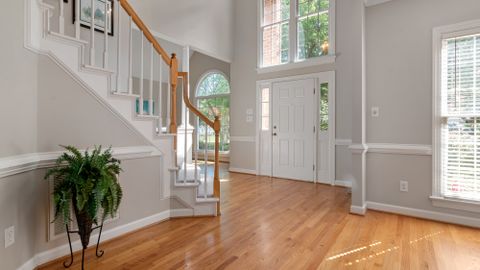
An umbrella policy provides personal liability coverage above the limits of your auto, home and other underlying policies.
It is among the best value in personal insurance and among the least purchased.
How it works
Underlying policies pay first, up to their limits. The umbrella pays above that, up to its own limit.
If you cause an accident resulting in a judgment of $900,000, and your auto liability limit is $300,000, the auto policy pays $300,000 and a $1 million umbrella pays the remaining $600,000.
Without it, the $600,000 is yours.
Why it is inexpensive
Because the underlying policies absorb all the frequent claims.
Most liability claims settle well within primary limits. Claims that exceed $300,000 are rare, which means the umbrella's expected loss cost is low.
Typical pricing for a first million of coverage is modest annually, with additional millions costing progressively less.
For most households the entire cost is less than a single month of auto premium.
What it covers beyond the underlying policies
Frequently broader than the primary policies, which is an underappreciated feature.
Many umbrella policies cover certain personal injury claims that homeowners policies exclude — libel, slander, defamation, false arrest, malicious prosecution, invasion of privacy.
Given how easily a social media post can generate a defamation claim, this is more relevant than it once was.
Coverage frequently extends worldwide.
Legal defense costs are typically covered and often paid in addition to the limit rather than eroding it — worth confirming, since defense costs alone can be substantial.
Coverage may extend to activities the primary policies do not address, such as serving on a nonprofit board in some forms, though this varies and should be checked specifically.
The underlying limit requirements
Umbrella insurers require minimum limits on the policies beneath.
Commonly: auto liability at 250/500/100 or higher, and homeowners liability at $300,000 or higher.
Which means buying an umbrella frequently requires raising primary limits, adding some cost.
The combination is still inexpensive relative to the protection, and the raised primary limits are themselves worthwhile.
Important: if you drop below the required underlying limits, or let an underlying policy lapse, you may be treated as self-insured for that gap. The umbrella will not fill in below its attachment point.
Who particularly needs one
Anyone with assets. Home equity, savings, investments. A judgment can reach them.
Anyone with substantial future income. Wage garnishment is available in many states, so a high earner with few current assets still has exposure.
Households with teenage drivers. The highest-risk driving demographic operating your vehicles.
Dog owners, particularly of breeds with bite claim histories. Note that some homeowners policies exclude certain breeds, in which case the umbrella may also exclude them.
Owners of pools, trampolines and recreational equipment, which generate liability claims and attract attractive nuisance doctrine considerations.
Landlords, though rental property may require specific scheduling and some umbrellas exclude it or limit the number of units.
Anyone who hosts, given social host liability for alcohol service in many states.
Board members of homeowners associations and nonprofits, subject to checking whether the policy covers it.
What it does not cover
Business activities, generally. A home business needs commercial coverage.
Intentional acts.
Contractual liability you have assumed.
Your own injuries and your own property damage — it is liability coverage only.
Professional liability, which requires separate malpractice or errors and omissions coverage.
Punitive damages in some states, where public policy prohibits insuring them.
Damage to property in your care, custody or control, in many forms.
Choosing a limit
Start from net worth plus a multiple of income, since a judgment can reach future earnings.
Two million is a common starting point for a household with meaningful assets. Higher net worth households frequently carry five million or more.
Because additional millions cost progressively less, the marginal cost of a higher limit is small.
Consider also the exposure rather than only the assets — a household with several young drivers has more exposure than one with two careful adults.
Practical points
Buy it from the same insurer as the underlying policies where possible, which simplifies claims and frequently produces a discount.
Where coverages are with different insurers, confirm the umbrella insurer accepts them and that there is no gap between the primary limits and the attachment point.
Disclose everything — vehicles, drivers, properties, watercraft, recreational vehicles, rental units, dogs, pools. Undisclosed exposures may not be covered.
And review it after any significant change in assets, income or household composition.
General information about insurance products, not insurance or legal advice. Umbrella terms, exclusions and underlying requirements vary by insurer and state. Consult a licensed agent and read the policy.
Also by Grace Mbeki
- A yearly insurance review across everythingClaims & Disputes
- Choosing an insurer, not just a priceClaims & Disputes
- Homeowners coverage: the annual checkHome & Property
- The annual auto policy reviewAuto Insurance